Engine-derived ROI benchmarks for Destin-area short-term rentals, single-family rentals, and small commercial properties. Numbers come from running real fixtures through the Cost Seg Smart engine — same engine that produces your actual study. Studies from $495.
Operated by Cost Seg Smart. Studies are IRS-aligned, audit-defense-included. 5 fixture benchmarks computed May 2026.
Numbers above are engine-estimated outputs from running 5 representative fixtures — not promises about what your specific property will produce. Results vary based on actual property condition, year built, renovation history, county assessor data quality, and rental treatment (STR vs LTR). Full per-fixture table, neighborhood breakdown, and downloadable CSV/PDF on the Destin cost seg benchmarks page.
Destin sits in the cleanest possible state-tax position for cost segregation: Florida has zero individual income tax, so federal §168(k) bonus depreciation produces the entire tax-savings benefit with no state-level decoupling, addback, or reconciliation. A Destin owner taking $80,000 of accelerated reclassification at the 37% federal bracket captures the full $29,600 in real first-year savings — no leakage to a state schedule.
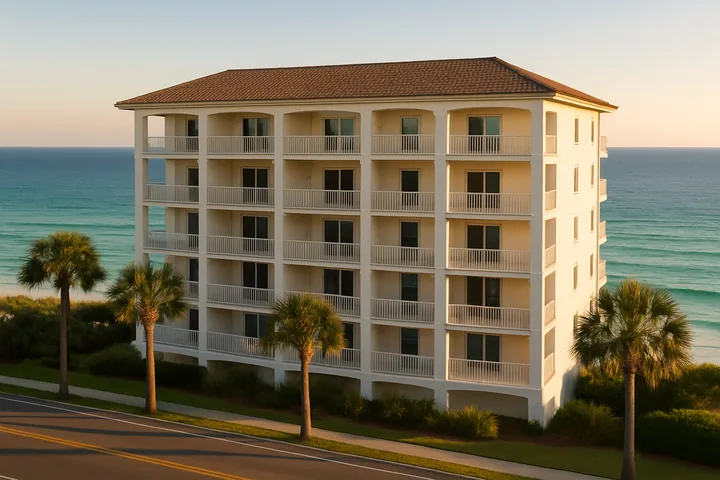
Structurally, Destin is a condo-heavy market, and that shapes the cost-seg picture in three specific ways. First, condo land allocations run lower than free-standing residential because vertical density absorbs the gulf-front land scarcity premium across many units — typical Destin condo basis sits at 22–28% land vs 30–38% in beachfront SFR markets. That means more depreciable basis per dollar of purchase. Second, FF&E density is high for furnished beach-rental units (full kitchens, in-unit washers/dryers, balcony furniture, electronics packages, bunk-beds-for-families layouts) and counts toward the 5-year personal property reclassification. Third, condo capital assessments are an underrated piece of basis tracking — post-2018 hurricane-cycle assessments for envelope work, balcony reconstruction, and elevator/HVAC replacements have been substantial across many Destin condo associations, and a cost-seg study can sometimes pull short-life components out of those assessments.
The buyer profile in Destin is unusually first-time-STR-friendly: inland Southeastern buyers (Atlanta, Birmingham, Nashville, Charlotte) using Destin as their entry STR purchase. They're typically less sophisticated about cost-seg than the portfolio-owner profile that dominates Gatlinburg — meaning education is part of the conversion, and clear before/after math wins.
Verify with your CPA. State tax conformity rules for federal §168(k) bonus depreciation are adjusted frequently — multiple states have modified their treatment two or more times in the past decade. The general framing on this page reflects our understanding as of May 2026, but you should always verify current-year treatment with a qualified CPA or tax attorney before relying on specific dollar projections for your situation.
These aren't rough estimates. Each fixture was run through the same engine that produces your actual study — RSMeans 2024 base costs, BLS PPI time index, county assessor land allocation, IRS Pub. 946 / Rev. Proc. 87-56 MACRS classification, 100% bonus depreciation per OBBBA.
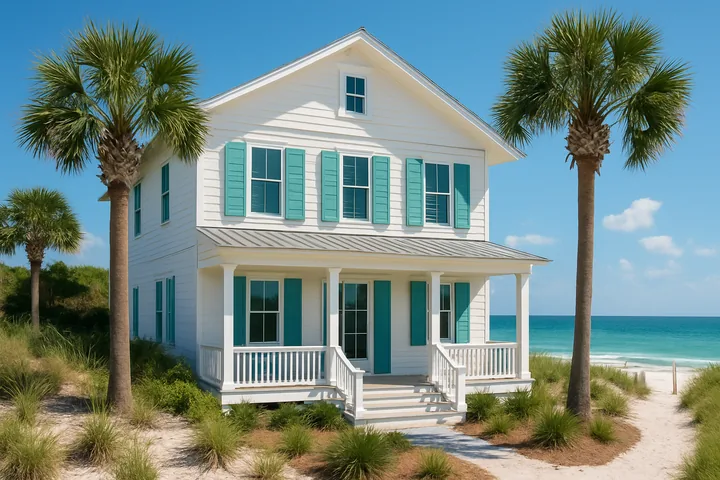
| Purchase price | $685,000 |
| Depreciable basis | $515,531 |
| Land allocation | 24.7% |
| 5-year reclassified | $95,580 |
| 15-year reclassified | $33,528 |
| Total reclass | 25.5% |
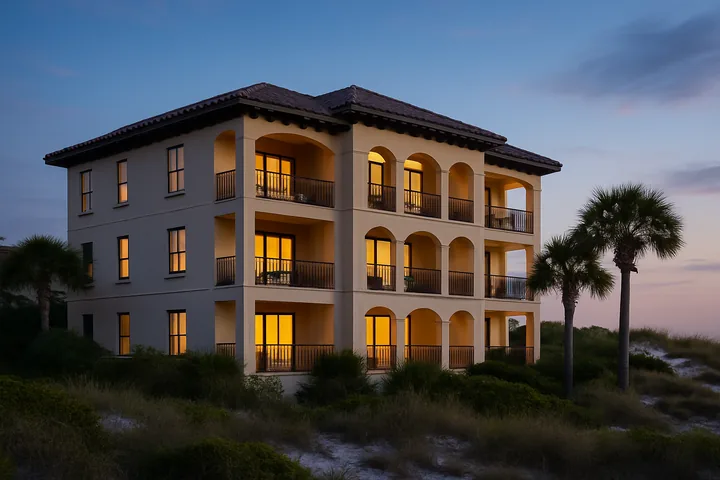
| Purchase price | $1,450,000 |
| Depreciable basis | $1,086,340 |
| Land allocation | 25.1% |
| 5-year reclassified | $226,146 |
| 15-year reclassified | $64,969 |
| Total reclass | 27.5% |
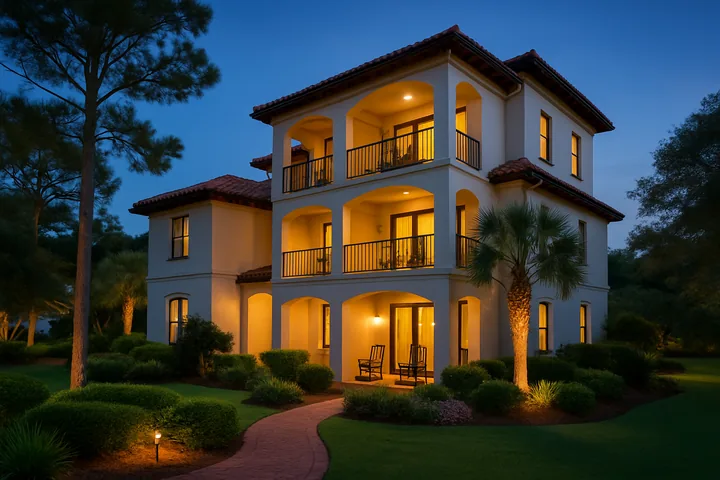
| Purchase price | $1,150,000 |
| Depreciable basis | $849,620 |
| Land allocation | 26.1% |
| 5-year reclassified | $175,109 |
| 15-year reclassified | $53,387 |
| Total reclass | 27.5% |
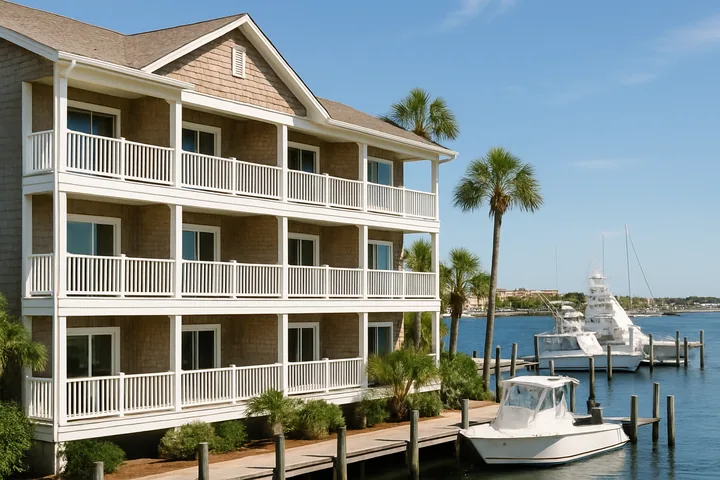
| Purchase price | $825,000 |
| Depreciable basis | $608,025 |
| Land allocation | 26.3% |
| 5-year reclassified | $118,608 |
| 15-year reclassified | $38,134 |
| Total reclass | 26.3% |
| Purchase price | $495,000 |
| Depreciable basis | $272,491 |
| Land allocation | 45.0% |
| 5-year reclassified | $29,534 |
| 15-year reclassified | $2,718 |
| Total reclass | 11.8% |
Cost-seg ROI varies more by neighborhood than by city. Destin's 5 sub-markets each have their own land-allocation pattern and property archetype:
| Neighborhood | Typical value | Typical land allocation | Profile note |
|---|---|---|---|
| Destin proper (Highway 98) | $685,000 | ~24% | Okaloosa County. Mid-rise gulf-front condo stock dominates. High vertical density compresses land allocation. Active condo-association capital-assessment activity post-2018 hurricane season. |
| Miramar Beach | $925,000 | ~28% | Walton County, eastward from Destin proper. Mix of gulf-front condos and beach SFR. Slightly higher land allocation due to lower density. |
| Crystal Beach | $1,150,000 | ~30% | Boutique residential pocket east of Destin Harbor. Beach-cottage and boutique condo stock, higher land allocation due to lot-size premiums. |
| Sandestin Golf & Beach Resort | $825,000 | ~26% | Master-planned resort community with golf, marina, beach. HOA capital assessments are a meaningful piece of basis tracking. Mixed condo/villa product. |
| Holiday Isle / Harbor | $595,000 | ~22% | Boating-corridor sub-market, mix of bayfront condos and harbor-side SFR. Lower land allocation, lower ADR than gulf-front but lower entry price. |
Methodology note: "Typical land allocation" reflects baseline patterns for the sub-market. For ultra-premium or resort-tier inventory where reconstruction cost exceeds 2.0× the implied depreciable basis after subtracting baseline land, the engine applies a premium land floor (~50%) to keep the study within audit-defensible territory. This means individual fixture engine output may exceed the neighborhood typical — especially for resort-tier ski-in/ski-out, beachfront, or view-premium product where land scarcity dominates value. See the /data/ page for per-fixture land-source attribution. Results vary substantially by specific property condition, renovation history, and assessor records.
Destin and Walton County are STR-friendly relative to most U.S. coastal markets. Both jurisdictions permit short-term rental operation in most residential zones, subject to registration, sales-tax collection, and tourist-development-tax remittance. The City of Destin requires a Vacation Rental Permit with annual renewal. Walton County requires a Vacation Rental Certificate. Both regimes are administratively predictable and not subject to the periodic-rewrite volatility seen in Joshua Tree, Austin, or Nashville. The bigger regulatory factor for Destin owners is hurricane-related — insurance availability and cost is the practical hold-period risk, and post-2024 capital-assessment activity for envelope repairs, balcony reconstruction, and storm-hardening has been substantial across many condo associations. Material participation under §469 is achievable for self-managing condo owners (single-unit operations are workable) but harder for portfolio holders using full-service property management — document hours contemporaneously.
For the full IRS-rule reference layer (§168(k), §469 material participation, state conformity), see irsdepreciationrules.com — our open reference site.
Special capital assessments — yes, capitalized as additions to your basis. Recurring HOA dues — no, those are operating expenses deducted against rental income in the year incurred. The Destin condo market has seen substantial special assessments post-2018 (hurricane cycle) and post-2024 for envelope repairs, balcony reconstruction, storm-hardening retrofits, elevator/HVAC replacement, and pool deck rebuilds. When you pay a $35,000 special assessment for a balcony reconstruction project, that's added to your basis and depreciates over the same schedule as the original property. A cost-seg study can sometimes identify short-life components within HOA-funded improvements (decking, lighting, balcony rail systems, FF&E in shared amenity spaces) and reclassify your pro-rata share into 5- or 15-year categories — though the engineering case for that allocation has to be documented carefully. Track all special assessments separately from regular dues.
Different shapes. Gulf-front condos win on reclassification-as-percent-of-basis because land allocation is lower (vertical density compresses the gulf-front land scarcity premium across many units — typical 22–28% land allocation). Beach SFRs win on absolute dollars because the basis is bigger ($1M–$3M range vs $500K–$1.5M condo range), even though land allocation runs higher (28–38%). For a $1.5M Miramar Beach SFR, the engine typically produces 25–30% reclassification with $50K–$90K of Y1 federal savings at 37% bracket; for a $685K Highway 98 condo, the engine produces 22–28% reclassification with $24K–$36K of Y1 federal savings. Per dollar of basis, the SFR usually wins; per dollar of purchase price, they're close.
Not the study itself — the engine's MACRS classification and component identification don't change based on hurricane risk. But hurricane exposure affects two upstream factors that matter to the overall return on the cost-seg study. (1) Insurance: post-2022, Florida property insurance has become expensive and in some condos hard to obtain. The insurance premium increase compounds against the cost-seg deduction — your operating margin may shrink even as your Year-1 tax savings is captured. (2) Hold-period assumptions: storm-cycle capital assessments can be lumpy, and a condo that needs a $50K special assessment 18 months after purchase changes the buyer's effective hold-period math. Build conservative hold-period assumptions into your underwriting; the cost-seg tax savings is real, but the operating economics around it should be modeled defensively.
It doesn't. Florida levies a 6% state sales tax plus county discretionary surtax on rentals under six months — that's a tax YOU collect from guests, remit to the state, and deduct as an expense against rental income for your federal Schedule E. It doesn't affect your depreciable basis, doesn't affect MACRS classification, doesn't affect federal §168(k) bonus depreciation. Same with the county Tourist Development Tax ('bed tax') — separate flow, no interaction with cost segregation. The only Florida-side tax that matters for cost-seg math is the absence of state individual income tax: there's no state addback on your federal bonus, and federal savings is the entire tax story.
Treated the same by the engine — same MACRS classification, same component analysis, same land allocation methodology. The differences are in the basis-tracking and capital-assessment cadence rather than the cost-seg study itself. Sandestin's master-planned community structure means HOA capital assessments are levied more proactively (golf course maintenance reserves, marina rebuilds, beach amenity work) and at higher absolute dollar amounts than most stand-alone Destin condos. Buyers need to track these against basis. Sandestin's mix of fee-simple villas and condo-form ownership also creates slight differences in what gets included in the depreciable basis (interior unit improvements vs shared common areas).
More general cost-seg questions answered at costsegsmart.com/faq/.
Cost Seg Smart studies are IRS-aligned, engineering-reviewed, and include written audit defense. Pricing is transparent and starts at $495 for residential properties under $300K — full pricing on the main site.